

In an age defined by ever‑accelerating innovation, the world of computing and digital systems continues to evolve at a breakneck pace. Among the many technological identifiers, components, and hardware solutions emerging in this landscape, kutop‑cs.536b has become a term drawing growing attention. While at first glance it may resemble a cryptic code, a deeper examination reveals that kutop‑cs.536b represents much more than mere alphanumeric text it signifies a versatile and impactful tool with wide‑ranging applications in modern technology environments.
In this comprehensive article, we’ll explore what kutop‑cs.536b truly is, the technology behind it, its practical significance, real‑world applications, and why it matters to both professionals and enthusiasts alike.
Understanding What kutop‑cs.536b Is
At its core, kutop‑cs.536b is best described as a structured identifier or designation used across technical systems and computing environments. Unlike consumer products that have familiar brand names and marketing descriptions, identifiers like kutop‑cs.536b are deliberately formatted strings that represent specific models, configurations, or versions within broader frameworks.
In many technical and digital systems, identifiers serve a critical purpose: they ensure clarity, traceability, and consistency when referencing specific components, software modules, or configurations. The value of a structured identifier lies in its ability to eliminate ambiguity and provide teams whether developers, administrators, or end users with a concise, universally understood reference.
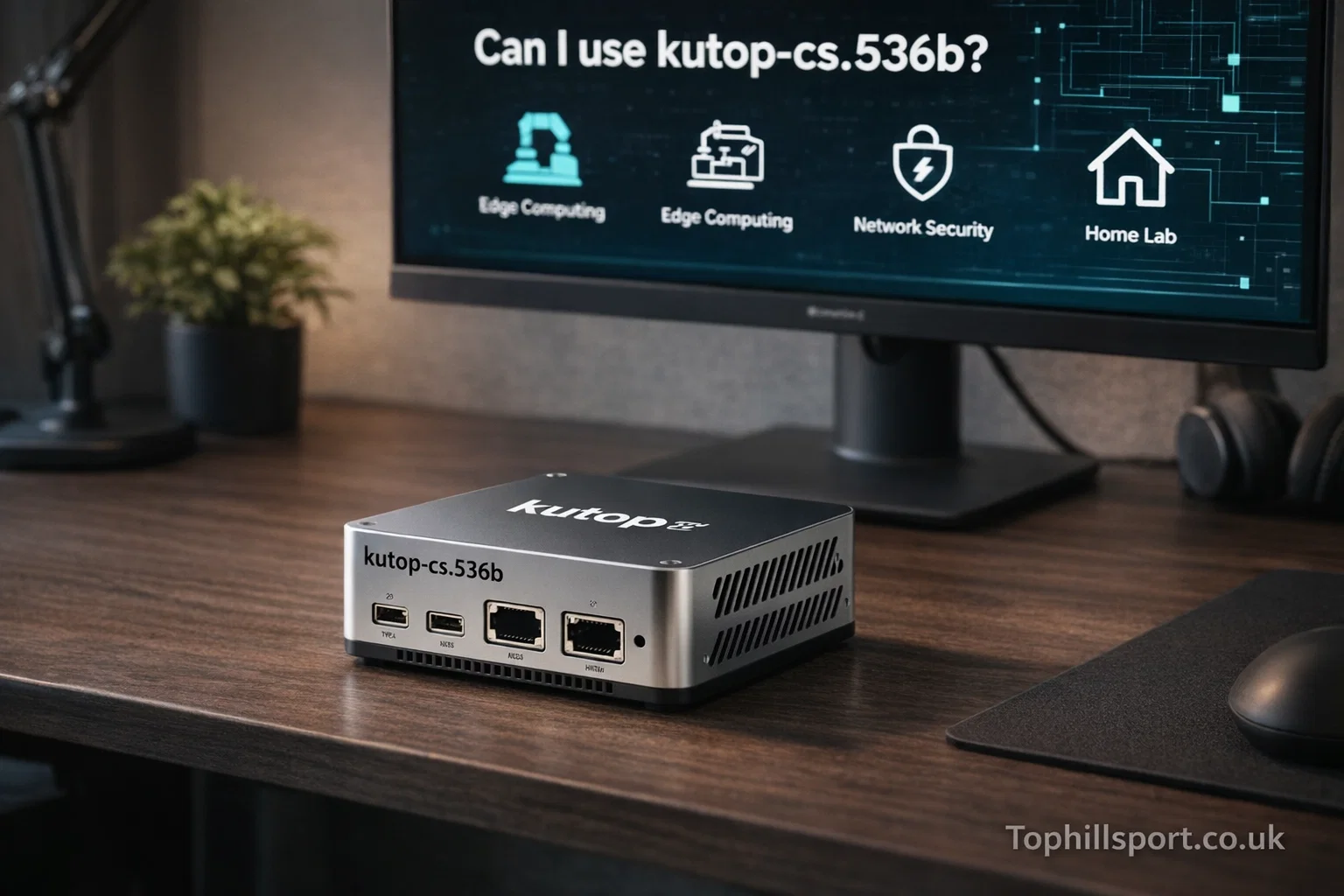
While some sources portray kutop‑cs.536b purely as an internal reference, others describe it as associated with a compact mini PC or small computing system that has relevant industrial, automation, and home technology applications. This dual understanding highlights how identifiers can bridge abstract technical concepts with tangible hardware implementations.
The Structural Meaning Behind the Identifier
To appreciate the importance of an identifier like kutop‑cs.536b, it helps to break down what each segment could imply. Structured identifiers are rarely random; rather, they encapsulate meaningful metadata:
-
“kutop” – This prefix may relate to a system family, product line, or classification group. It helps differentiate this unit from others in a larger portfolio.
-
“cs” – Often used in computing contexts to denote a system type, subsystem, or category (e.g., “computer system,” “control system”).
-
“536b” – A numerical and alphabetical suffix typically signifying a version, build number, or specific variation in an iterative series.
This structure enables teams operating in complex environments such as enterprise IT, databases, or automation stacks to quickly recognize what component or module they’re dealing with without relying on verbose descriptions.
Core Technology and Architecture
Although identifiers like kutop‑cs.536b are often used in documentation rather than marketed as products, information suggests that they are closely tied to compact computing solutions with robust hardware capabilities. One illustration of this is the concept of a “mini PC” associated with this identifier a small, fanless computing system designed for continuous operation.
Processing and Performance
The computing units linked with this identifier typically incorporate:
-
A quad‑core processor optimized for multitasking and efficient performance.
-
8GB or more of RAM, enabling smooth operation across workloads.
-
SSD storage options ranging from 128GB to 512GB for fast boot times and data access.
These core specifications are becoming increasingly relevant in environments where reliability, energy efficiency, and compact form factors are necessary from edge computing nodes to automation systems.
Connectivity and Integration
A standout feature of the hardware context for kutop‑cs.536b is its comprehensive connectivity suite:
-
USB, HDMI, DisplayPort interfaces — for peripheral and display support.
-
Ethernet and Wi‑Fi 6 connectivity — modern networking capabilities.
-
GPIO pins — for custom hardware integration.
This convergence of interfaces makes such systems practical hubs in distributed networks where flexibility and expandability are critical.
Practical Applications in Industry and Technology
While structured identifiers are widely used in IT documentation and systems, when associated with hardware platforms like the one implied by kutop‑cs.536b, the applications become much more tangible:
Industrial Automation
In factory automation, systems must operate reliably under continuous workloads. Devices associated with this identifier can:
-
Control machinery with low latency
-
Monitor process variables
-
Support predictive maintenance algorithms thanks to rapid data processing and robust connectivity.
These capabilities help reduce downtime and improve workflow efficiency a key demand in industrial settings today.
Edge Computing and IoT Ecosystems
Edge computing is rapidly growing because processing data closer to the source reduces network load and speeds decision‑making. Platforms linked with kutop‑cs.536b are well‑suited for distributed applications such as:
-
Smart sensors and IoT nodes
-
Real‑time analytics
-
Localized data pre‑processing before cloud integration.
Their flexibility enables integration with diverse protocols and device types, making them valuable in IoT ecosystems.
Network Security and Firewall Platforms
Interestingly, these computing platforms can also serve as the backbone for network security appliances. With multiple network ports and support for advanced encryption, systems using this identifier can run firewall or unified threat management (UTM) software like pfSense or OPNsense, offering enterprise‑grade protection.
Benefits of Using Systems Associated with kutop‑cs.536b
There are several reasons why identifiers like kutop‑cs.536b and the systems they represent have become important:
Precision and Consistency
In documentation, identifiers reduce ambiguity and human error. When software, hardware, or configurations are consistently named, teams can collaborate more smoothly and avoid costly miscommunication.
Versatility in Deployment
These systems can be deployed across environments from industrial sites to research labs because of their robust design and support for multiple operating systems including Linux distributions and specialized server platforms.
Energy Efficiency and Durability
Fanless designs and solid‑state storage mean lower power consumption, quieter operation, and fewer moving parts to fail critical elements for systems that need to run 24/7 without maintenance.
Common Misconceptions and Clarifications
One reason users often search for kutop‑cs.536b is uncertainty over whether it’s a product, software tool, or something else entirely. Most evidence points to it being an identifier used within technical frameworks, rather than a standalone product with embedded manuals or consumer‑friendly documentation.
Identifiers like this don’t have downloadable executables or traditional product branding they simply label something already present within a system. For example, it could name a specific build of firmware, a hardware revision, or a configuration profile.
This explains why sources often focus on interpreting the code, describing its structure, and contextualizing where it appears rather than offering user guides because it doesn’t function independently outside its intended environment.
Future Outlook and Technological Significance
Looking ahead, identifiers like kutop‑cs.536b will continue to be crucial as systems become more interconnected and complex. They provide essential building blocks for seamless automation, enhanced data handling, and reliable distributed computing.
Moreover, the hardware platforms associated with such codes compact, efficient computing devices are likely to gain even more traction as industries pursue automation, IoT integration, and smart infrastructure projects. Their mix of performance, flexibility, and affordability positions them as valuable assets in emerging technology strategies.
Read More: kutop‑cs.536b: Revolutionizing the Market with Cutting‑Edge Technology
Conclusion
kutop‑cs.536b exemplifies how structured identifiers and compact computing platforms intersect in today’s technical landscape. While on the surface it might appear to be a string of letters and numbers, in practice it serves as a powerful reference point within systems that demand precision, reliability, and adaptability. Used in environments ranging from edge computing to industrial automation, its relevance extends far beyond simple nomenclature.
Whether you’re a developer, engineer, or IT professional, understanding identifiers like kutop‑cs.536b helps demystify the hidden layers of complex systems and equips you with insights into how modern technology continues to evolve through structured innovation.





Leave a Reply