

In a world that moves faster every year, new ideas often emerge to explain how people learn, work, and grow under constant change. One such emerging concept is duaction. Although the word itself may feel unfamiliar, the idea behind duaction reflects something many people already experience in daily life: learning and doing at the same time. Instead of separating education from action, duaction blends them into one continuous process. This article explores duaction as a concept, explains why it matters today, and shows how it can reshape learning, work, and personal development in a fast-changing world.
What Is Duaction and Why Does It Matter Today
Duaction is best understood as the combination of two forces: learning and action happening simultaneously. Traditionally, people are taught to learn first and act later. You study, prepare, memorize, and only then apply knowledge in the real world. Duaction challenges this old model by suggesting that learning is most powerful when it happens during action, not before or after it. In a world where technology, jobs, and skills change rapidly, waiting to “finish learning” before acting often means falling behind. Duaction matters today because it reflects how people actually grow in real life by trying, failing, adjusting, and improving while moving forward.
This concept is especially important in modern environments where uncertainty is normal. Careers no longer follow straight paths, and many jobs require skills that did not exist a few years ago. Duaction allows people to adapt in real time. Instead of feeling stuck because they do not know everything yet, individuals using duaction accept that learning is ongoing. They act with what they know now and refine their understanding as they go. This mindset reduces fear, increases confidence, and supports continuous growth.
The Origins and Meaning Behind the Concept of Duaction
The term duaction may sound new, but its roots can be found in long-standing human behavior. Humans have always learned by doing. Children learn to walk by trying, falling, and trying again. Craftspeople learn skills through practice, not only through instruction. Duaction gives a modern name to this natural process and places it at the center of learning and development.
The meaning of duaction goes beyond simple practice. It emphasizes reflection during action. While acting, individuals observe outcomes, think critically, and adjust their behavior. This creates a loop where action leads to insight, and insight leads to better action. Unlike passive learning, duaction requires engagement, responsibility, and awareness. It is not about rushing without thinking; it is about thinking while moving.
In today’s knowledge-driven society, this concept has gained attention because information alone is no longer enough. People have access to endless resources online, yet many still struggle to apply what they learn. Duaction addresses this gap by encouraging immediate application, turning information into experience and experience into understanding.
How Duaction Differs from Traditional Learning Models
Traditional learning models often rely on structure, schedules, and predefined outcomes. You attend classes, complete courses, and receive certifications before entering real-world situations. While this approach has value, it can be slow and inflexible. Duaction differs by prioritizing relevance and immediacy. Learning is shaped by real challenges rather than abstract lessons.
Another key difference is the role of mistakes. In traditional systems, mistakes are often penalized. In duaction, mistakes are essential. They provide feedback that guides improvement. Instead of fearing failure, individuals see it as part of the learning process. This shift in mindset can be freeing, especially for adults who may feel pressure to appear competent at all times.
Duaction also differs in motivation. Traditional learning sometimes feels disconnected from real needs, which can reduce engagement. Duaction, on the other hand, is driven by purpose. People learn because they need solutions now. This urgency makes learning more meaningful and memorable. By connecting knowledge directly to action, duaction transforms learning from a requirement into a necessity.
Duaction in Education and Skill Development
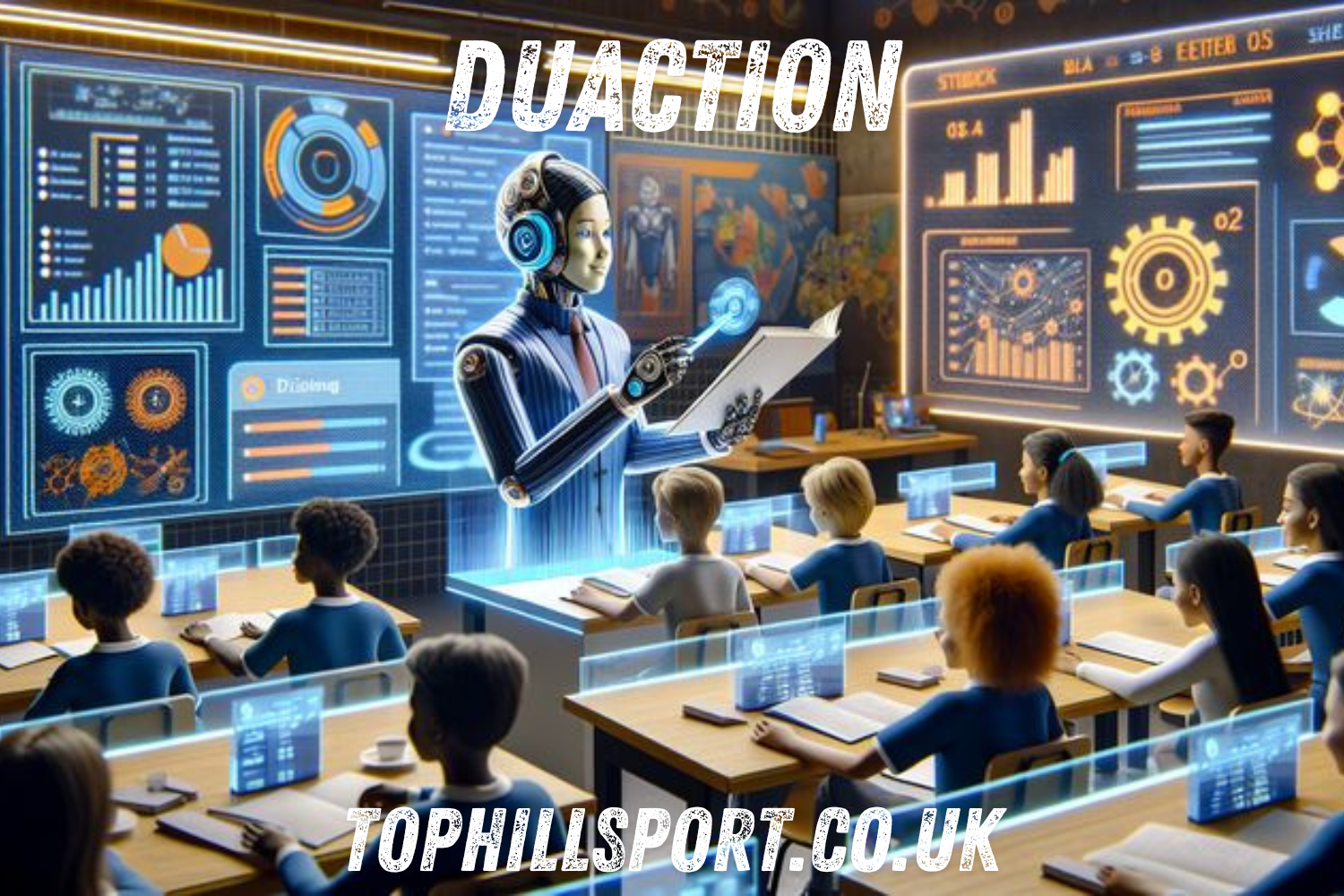
In education, duaction offers a powerful alternative to purely theoretical instruction. Students often ask, “When will I use this?” Duaction answers that question immediately. By integrating projects, real-world problems, and hands-on activities into learning, students see the value of knowledge as they acquire it.
Skill development through duaction is particularly effective in areas that require adaptability, such as technology, communication, and leadership. Instead of mastering concept in isolation, learners practice skills in realistic contexts. This approach builds confidence and competence at the same time. Learners are not just prepared for the future; they are actively shaping it.
Duaction also supports lifelong learning. In a world where careers evolve, people must continuously update their skills. Duaction makes this process less overwhelming by breaking learning into manageable, action-based steps. Rather than returning to formal education repeatedly, individuals learn through their work, hobbies, and daily challenges. This keeps learning relevant and sustainable over time.
The Role of Duaction in Modern Work Environments
Modern workplaces are ideal settings for duaction. Many organizations operate in fast-paced environments where waiting for complete information is not an option. Employees are expected to learn new tools, processes, and strategies while performing their roles. Duaction supports this reality by encouraging learning within workflows.
In teams, duaction promotes collaboration and shared learning. When people work together on real tasks, they exchange knowledge naturally. Feedback becomes immediate, and improvements happen quickly. This creates a culture of growth rather than perfection. Employees feel empowered to experiment and innovate without fear of making mistakes.
Duaction also supports leadership development. Leaders often learn best by leading. Through duaction, emerging leaders gain experience by taking responsibility, reflecting on outcomes, and adjusting their approach. This hands-on learning builds practical wisdom that cannot be gained through theory alone. In this way, duaction helps organizations remain agile and resilient.
Duaction and Personal Growth in Everyday Life
Duaction is not limited to education or work; it plays a significant role in personal growth. Many people delay action because they feel unprepared. They wait until they have more knowledge, confidence, or resources. Duaction challenges this mindset by encouraging people to start where they are.
Personal goals such as improving health, learning a new skill, or building relationships benefit from duaction. Instead of planning endlessly, individuals take small actions and learn from the results. This reduces procrastination and builds momentum. Each step forward provides insight that shapes the next step.
Duaction also supports self-awareness. By reflecting during action, individuals gain a deeper understanding of their strengths, limitations, and preferences. This self-knowledge is essential for meaningful growth. Over time, duaction helps people develop resilience, adaptability, and a sense of agency in their lives.
Challenges and Misunderstandings About Duaction
Despite its benefits, duaction is sometimes misunderstood. One common misconception is that it encourages careless action without preparation. In reality, duaction values thoughtful action. It does not reject planning but avoids excessive planning that prevents progress. The goal is balance, not recklessness.
Another challenge is discomfort with uncertainty. Duaction requires accepting that not everything will be clear from the start. This can be difficult for individuals accustomed to structured systems. However, learning to operate under uncertainty is a valuable skill in itself. Duaction helps people become comfortable with change by practicing adaptability regularly.
There is also the risk of burnout if duaction is misunderstood as constant action without reflection. Reflection is a core part of duaction. Without it, action becomes repetitive rather than educational. To truly benefit from duaction, individuals must pause, evaluate outcomes, and integrate lessons learned.
The Future Potential of Duaction in a Changing World
As the world continues to evolve, the relevance of duaction is likely to grow. Automation, artificial intelligence, and global connectivity are reshaping how people live and work. In this environment, the ability to learn quickly and apply knowledge immediately is more valuable than static expertise.
Duaction aligns well with future demands because it emphasizes adaptability and continuous improvement. It prepares individuals not for specific tasks, but for ongoing change. By learning through action, people develop problem-solving skills that transfer across contexts.
Institutions may increasingly adopt duaction-based approaches, blending formal instruction with experiential learning. Communities and organizations that embrace duaction can respond more effectively to challenges, innovate faster, and support human development in meaningful ways. The future belongs to those who can learn while moving forward.
Why Duaction Represents a Mindset, Not Just a Method
Ultimately, duaction is more than a technique; it is a mindset. It reflects a way of approaching life that values curiosity, courage, and reflection. People who embrace duaction do not wait for perfect conditions. They engage with the world as it is and grow through experience.
This mindset encourages responsibility. When learning and action are connected, individuals take ownership of their development. They become active participants rather than passive recipients of knowledge. This sense of agency is empowering and motivating.
Duaction also fosters humility. By acknowledging that learning is ongoing, individuals remain open to feedback and new perspectives. This openness supports collaboration and mutual growth. In a fast-changing world, such qualities are essential for both personal fulfillment and collective progress.
Conclusion
Duaction offers a fresh way of thinking about learning, action, and growth. By combining doing with learning, it reflects how people naturally adapt in real life. In education, work, and personal development, duaction provides a practical response to constant change. It encourages people to act with purpose, learn through experience, and grow continuously.
As the pace of change accelerates, the ability to learn while acting becomes increasingly important. Duaction empowers individuals to move forward despite uncertainty, turning challenges into opportunities for growth. By embracing duaction as both a concept and a mindset, people can navigate a fast-changing world with confidence, resilience, and meaning.





Leave a Reply