

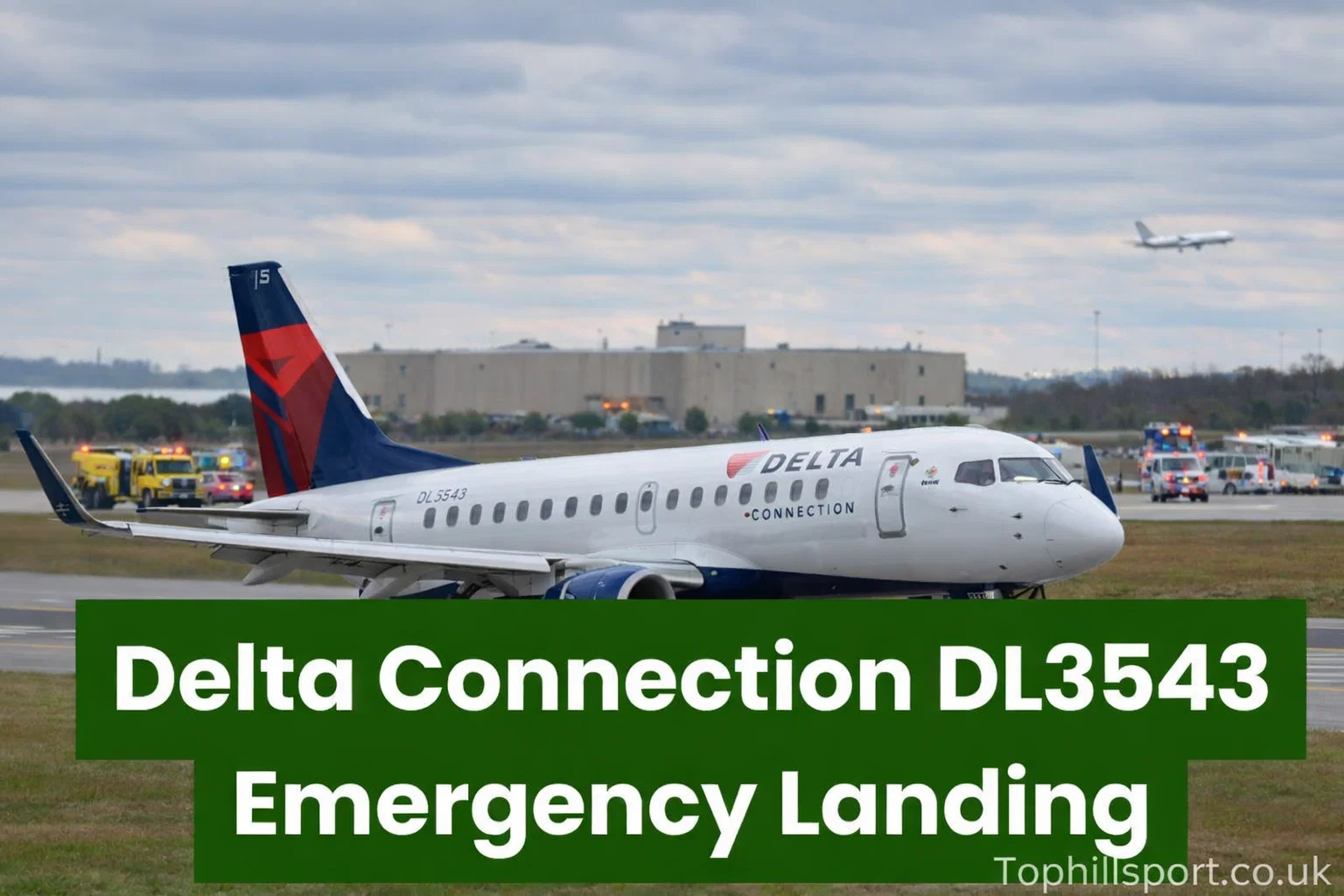
Delta Connection DL3543 became a headline‑worthy aviation event when it declared an emergency shortly after takeoff and returned to its departure airport. While many airline emergencies spark fear and confusion among passengers and the public, the DL3543 incident demonstrated how modern aviation safety systems and crew training work together to resolve potential problems with order and calm. In this in‑depth article, we explore the entire sequence of events, from departure to emergency landing, the passenger experience, what prompted the emergency, how aviation protocols protected everyone on board, and the broader lessons this incident teaches about commercial air travel.
Understanding the Flight and Its Routine Nature
Delta Connection DL3543 was a short‑haul regional passenger flight operating between Minneapolis–Saint Paul International Airport (MSP) and Chicago Midway International Airport (MDW). Scheduled as a typical domestic connection service, DL3543 is one of many regional jets that ferry passengers between busy airline hubs across the United States.
Regional flights such as DL3543 are often operated by Delta Connection, a branding used by Delta Air Lines for its regional partners in this case, flown by the regional carrier Endeavor Air. These smaller jets, like the Embraer 170/175 series, are designed to efficiently serve shorter routes while maintaining the same safety and operational standards as larger Delta mainline flights.
On July 7, 2025, passengers boarded DL3543 expecting a routine one‑hour flight between MSP and MDW. Weather conditions were reported as normal, and nothing unusual disrupted the departure process. Cabin crew completed their standard safety briefing, engines powered up, and the aircraft departed as scheduled.
Early Moments After Takeoff
Just minutes into the flight not long after leaving the ground something unexpected occurred. Approximately 10 minutes after takeoff, as the aircraft climbed and stabilized, the pilots identified a technical irregularity. Although flight details revealed minimal external factors such as turbulence or weather, onboard systems indicated something unusual within the aircraft’s systems.
The flight crew had only recently begun the climb when they made the decision to halt the ascent and turn back toward MSP. At that point, those aboard likely felt the aircraft’s engines adjust course and observed the familiar outline of Minneapolis‑Saint Paul’s airport once more. According to flight tracking and aviation reporting systems, the aircraft’s transponder was set to “squawk 7700,” which is the universal code used by pilots to signal an emergency and request priority handling with air traffic control.
This precise moment marked the beginning of what would be officially registered as an emergency but it also demonstrated the crew’s training and professionalism in promptly addressing potential abnormalities before they escalated into more serious concerns.
What Triggered the Emergency Decision
One of the most important aspects of DL3543’s emergency was that it was precautionary in nature. Although initial reports did not confirm a specific catastrophic failure like engine loss or fire, aviation sources indicate the flight crew detected an alert related to the aircraft’s onboard systems that warranted immediate attention.
Such alerts might originate from:
-
Cabin pressurization monitoring systems (which ensure passenger comfort and safety at altitude),
-
Avionics or electrical sensors,
-
Mechanical system indicators,
-
Or early warning signs of irregular readings that defy standard operating parameters.
Even when a system alert doesn’t signify imminent danger, pilots are trained to take precautionary measures especially when flight safety could possibly be compromised later during cruise. Modern aircraft are equipped with highly sensitive sensors and diagnostic systems; any irregularity, no matter how small, is treated seriously to ensure passenger safety.
That approach designed to prevent rather than react is one reason why commercial aviation remains one of the safest forms of transportation in the world.
The Emergency Declaration and Interaction With Air Traffic Control
After identifying the system alert, the pilots reported the situation to Minneapolis air traffic control (ATC) and declared an emergency. Using the international emergency code 7700 on the aircraft transponder signals that a flight is seeking immediate priority handling. This allows ATC to clear airspace, inform emergency services, and guarantee the safest and fastest route back to the runway.
During an emergency declaration:
-
Air traffic controllers provide priority clearance for landing,
-
Other aircraft in the vicinity are vectored away from the flight’s path,
-
And ground emergency crews, including fire and medical units, are positioned strategically near the runway in case assistance is required during landing.
These protocols are standard across major international airports and are practiced daily through simulations and routine drills, ensuring that when an emergency happens in real life, personnel on both the ground and in the air know exactly what to do.
Passenger Reactions Inside the Cabin
When an emergency is declared mid‑flight, the experience inside the cabin can vary significantly depending on the communication skills of the crew and the passengers’ mindset. In the case of DL3543:
-
Many passengers likely felt initial surprise and tension when they noticed the aircraft begin its return maneuver,
-
Some may have heard the captain’s announcement reassuring everyone that the return was precautionary,
-
And cabin attendants remained calm, reinforcing their instructions clearly and professionally.
While public, verified personal accounts specifically from DL3543 are limited, customary passenger experiences during similar precautionary emergency landings based on aviation psychology studies show that calm and structured communication from the flight crew significantly reduces panic and stress. Attentive crew behavior, consistent updates, and a reassuring atmosphere all contribute to passenger compliance and emotional stability.
Passengers on DL3543 most likely noticed:
-
A sudden turn back toward the airport,
-
Emergency crews waiting near the runway upon approach,
-
And more active announcements from cabin staff emphasizing the seriousness of the procedure but reassuring everyone that no immediate danger was present.
For many travelers, the unexpected change in flight plan is unsettling, but how the crew manages that shift often determines whether the situation feels stressful or manageable.
The Emergency Landing at Minneapolis–Saint Paul
Approximately 37 minutes after departure, DL3543 safely returned to MSP and touched down on the runway without injury or incident. Emergency response teams, already positioned on standby due to the emergency declaration, were ready if needed though their involvement remained precautionary.
Airport emergency responders are trained to manage any potential outcome, but in this case, no fire, structural issues, or medical emergencies occurred. The plane taxied back to the gate normally once it was clear that the landing was resolved and the aircraft was under control.
Unlike more dramatic emergency landings, this incident did not involve:
-
Evacuation slides,
-
Deployment of emergency chutes,
-
Fire suppression activities,
-
Or medically urgent situations on the ground.
Instead, it became a textbook example of how an aircraft returns safely to its point of departure when an issue arises early in flight.
What Happens After a Precautionary Landing
Once the emergency landing is complete, several crucial procedures are followed to ensure safety and investigate the root cause:
Airport Inspection and Aircraft Maintenance
After DL3543 landed:
-
The aircraft was removed from active service,
-
Maintenance crews began a thorough inspection of the systems that triggered the alert (such as pressurization systems),
-
And diagnostics were performed to determine whether the aircraft was safe to return to flight operations.
Any anomaly whether hardware, software, or sensor‑related must be resolved before the plane reenters scheduled service. Federal regulators like the FAA monitor these inspections and may also require reporting depending on the type and severity of the issue.
Passenger Assistance and Rebooking
Meanwhile, passengers disembarked normally and were assisted with:
-
Rebooking on alternate flights,
-
Receiving compensation under airline policies for delayed or disrupted travel,
-
Potentially receiving vouchers for meals or accommodations if schedules were significantly affected.
These customer care procedures help mitigate the inconvenience of unscheduled departures and reflect the airline’s commitment to passenger satisfaction during operational disruptions.
Aviation Safety Culture and Protocols
The DL3543 emergency highlights a broader truth about modern air travel: aviation prioritizes prevention over reaction. Airlines train pilots and flight crew to respond to small system irregularities quickly, even if no immediate danger is evident.
Commercial aircraft are equipped with multiple redundant systems and sensors that continuously monitor every critical parameter from cabin pressure to electrical systems. When a sensor detects values outside normal limits, it triggers alerts that pilots must evaluate immediately.
Pilots undergo extensive training in full‑motion simulators that replicate various emergency scenarios including sudden system warnings, engine anomalies, and pressurization irregularities. Through this preparation, the cockpit crew develops muscle memory and decision‑making skills that allow them to handle real‑world irregularities with confidence and calm.
Additionally, airlines and aviation authorities maintain strict regulations surrounding emergency protocols. Any time a flight declares an emergency, even for precautionary reasons, it generates a paper trail and triggers a formal review. This culture of documentation and continuous learning ensures that the aviation ecosystem becomes safer with every event.
Why Emergency Landings Like DL3543 Are Reassuring, Not Alarming
To many travelers, the term emergency landing sounds dramatic. However, aviation professionals explain that in many cases, it is simply the most conservative and risk‑averse action pilots can take.
Here’s why the DL3543 experience should actually reassure frequent and occasional flyers alike:
-
Safety first: Modern aircraft and crews are trained to land early rather than wait for a potential problem to escalate.
-
Technology alerts early: Redundant monitoring systems detect issues long before they become dangerous.
-
Training works: Pilots and flight attendants rehearse emergency procedures constantly, ensuring fluid execution when needed.
-
Priority handling: Air traffic control and emergency responders treat every emergency as high priority even if it ends up being precautionary.
In that sense, DL3543’s return to MSP wasn’t an accident it was aviation safety functioning exactly as designed.
The Emotional Journey of Passengers
For passengers aboard DL3543, the emotional experience likely ranged from anxiety and curiosity to eventual relief. Here’s how most travelers experience a similar emergency landing:
-
Moment of surprise: Initially noticing the aircraft’s unexpected maneuvers,
-
Listening for direction: Waiting for announcements from the cockpit crew,
-
Trusting the professionals: Relying on flight attendants’ calm demeanor,
-
Relief on the ground: Landing safely and learning that everyone is okay.
While fear is a natural human response to uncertainty, understanding aviation safety protocols often helps passengers feel more confident in how such situations are resolved.
Frequently Asked Questions About Delta Connection DL3543
What caused the emergency?
A technical system alert likely related to pressurization or another core aircraft system led pilots to make a precautionary return to Minneapolis.
Were there any injuries?
No injuries were reported; everyone on board disembarked safely.
Did the aircraft crash?
No — the plane landed back at MSP without incident.
Is flying still safe after an incident like this?
Yes — aviation safety protocols, advanced training, and redundant aircraft systems make commercial flying extremely safe even when unexpected situations occur.
Read More: Delta Connection DL3543 Emergency Landing: What Passengers Experienced
Conclusion
The Delta Connection DL3543 emergency landing stands as a powerful example of how modern air travel handles uncertainty with structure, preparation, and professionalism. What might seem like a scary situation to passengers and observers actually becomes a demonstration of the aviation industry’s commitment to safety at every level from advanced onboard technology to skilled flight crews and coordinated ground support teams.
Instead of focusing on fear, the DL3543 incident should remind travelers that unexpected alerts are often caught early and responded to safely, far before any real danger develops. In the realm of aviation, being safe always takes priority over being on schedule and that mindset is what keeps millions of passengers safe every day.




Leave a Reply