

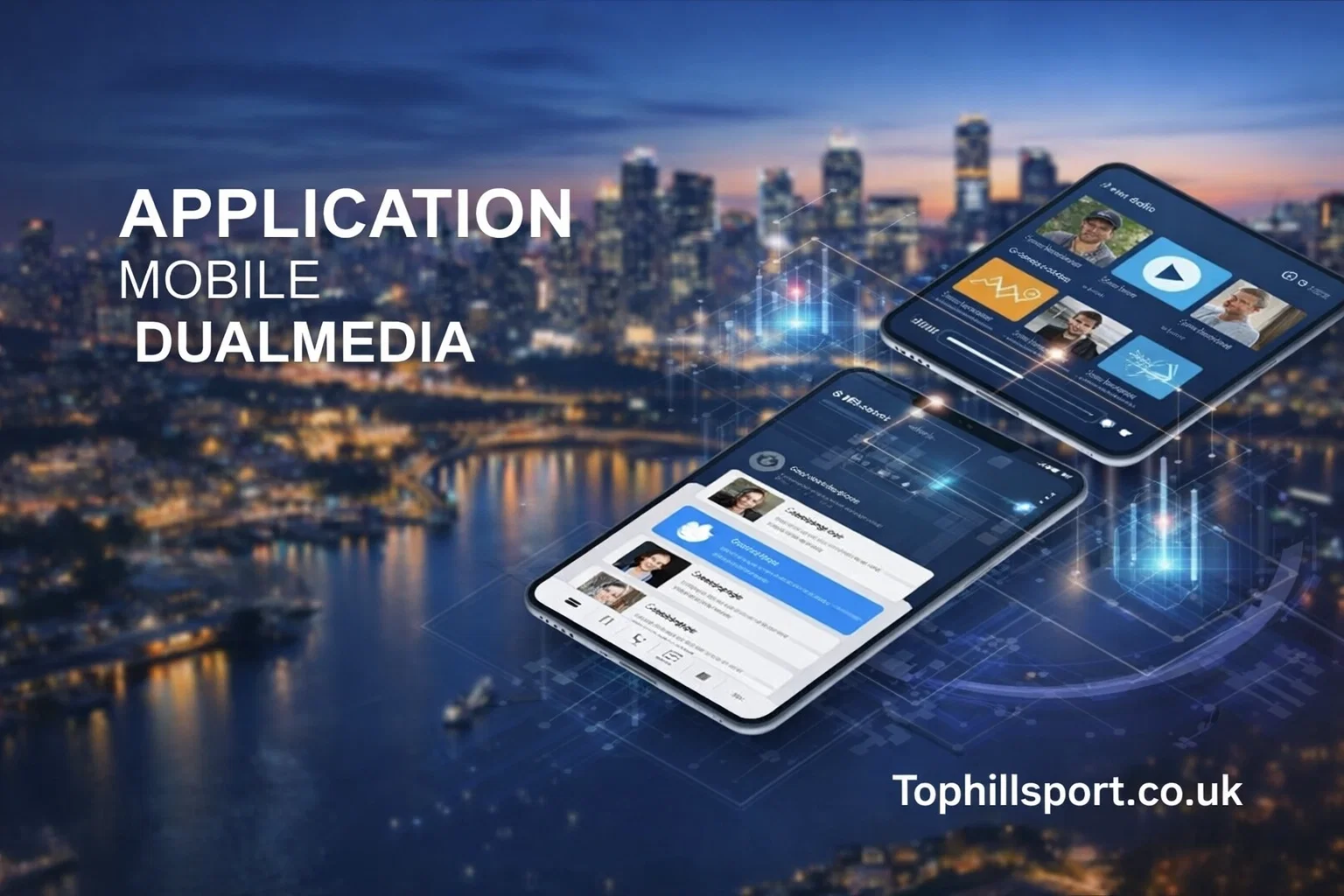
The digital world is evolving rapidly, and mobile applications are at the center of this transformation. People now rely on smartphones for communication, learning, entertainment, and business operations. As technology advances, users expect mobile apps to deliver richer and more engaging experiences. This expectation has led to the rise of application mobile dualmedia, a concept that combines multiple forms of media such as video, audio, images, and text within a single mobile platform.
Instead of using separate applications for different types of content, dualmedia apps allow users to interact with several media formats at once. This means a person can watch a video while reading supporting text, listen to audio commentary while viewing graphics, or share multimedia content in a single seamless experience. The goal of application mobile dualmedia is to make content consumption and creation more efficient, engaging, and interactive.
For businesses, developers, educators, and content creators, this innovation is incredibly important. It simplifies workflows, increases audience engagement, and reduces the need for multiple platforms. In this detailed guide, we will explore what application mobile dualmedia is, how it works, why it matters, and how it is shaping the future of mobile technology.
What Is Application Mobile Dualmedia?
At its core, application mobile dualmedia refers to a type of mobile application that supports two or more forms of media simultaneously within a single platform. These apps are designed to integrate media formats such as audio, video, text, images, and interactive features so users can consume and create multimedia content in one place.
Traditional apps usually focus on one type of content. For example, some applications specialize in video streaming, while others are dedicated to podcasts or image sharing. Dualmedia apps take a different approach by combining these functionalities. Instead of switching between apps, users can interact with multiple media types within the same interface.
For example, an educational dualmedia app might include video lectures, audio explanations, written notes, and quizzes all in one environment. Similarly, a content creator could record both a podcast and a video simultaneously, then publish the content across several platforms from the same application.
This ability to combine media formats provides a more immersive experience for users. By offering flexible ways to consume content, dualmedia apps cater to different learning styles and user preferences. Some people prefer watching videos, while others prefer listening or reading. Dualmedia applications accommodate all of these preferences simultaneously.
The Evolution of Mobile Media Applications
To understand why application mobile dualmedia is important today, it helps to look at how mobile apps have evolved over the years.
In the early days of smartphones, mobile applications were simple tools designed for specific tasks. Messaging apps handled communication, media players handled music, and browsers handled web content. These applications rarely combined multiple types of media in a single interface.
As smartphone technology improved, developers started building specialized apps for entertainment and media. Video streaming platforms, podcast apps, photo-sharing tools, and social media networks became extremely popular. However, users often had to switch between multiple apps to consume different types of content.
This fragmentation created inefficiencies. For instance, a content creator might record audio using one app, edit video using another, and publish content on a third platform. Managing multiple tools increased complexity and wasted time.
The concept of application mobile dualmedia emerged as a solution to this problem. By integrating different media types into one platform, dualmedia apps simplify the process of creating, sharing, and consuming content.
The growth of faster internet speeds, cloud computing, and advanced mobile processors has made this integration possible. Today’s smartphones are powerful enough to handle multimedia processing, allowing dualmedia applications to deliver smooth and responsive experiences.
How Application Mobile Dualmedia Works
The functionality of application mobile dualmedia depends on several technological components that allow multiple media types to operate together without performance issues.
First, these apps rely on multimedia processing systems capable of handling different file formats simultaneously. This includes audio files, video streams, image graphics, and text-based content.
Second, cloud storage and streaming technologies are used to store and deliver media efficiently. Instead of downloading large media files directly onto a device, many dualmedia apps stream content from remote servers. This reduces storage usage and ensures faster access to multimedia content.
Third, advanced user interface design plays a critical role. Dualmedia apps must present multiple types of content without overwhelming the user. Developers design interfaces that organize media into sections, overlays, or interactive elements so users can easily navigate between them.
Another important component is real-time synchronization. For example, some dualmedia platforms allow audio narration to play while visual slides or graphics appear on the screen. This requires precise timing and synchronization between different media streams.
Finally, modern dualmedia apps often include artificial intelligence features that help automate tasks such as caption generation, editing, and content recommendations. These AI tools improve the overall user experience and make content creation easier for non-technical users.
Key Features of Application Mobile Dualmedia
One of the reasons application mobile dualmedia has gained popularity is because of the wide range of features it offers. These features are designed to improve both content creation and consumption.
One key feature is dual-format support, which allows users to record, stream, or publish audio and video simultaneously. This capability is especially useful for podcasters, educators, and content creators who want to reach audiences across multiple media formats.
Another important feature is AI-powered editing tools. Many dualmedia apps include built-in artificial intelligence that can automatically edit recordings, generate captions, and enhance audio quality. These tools reduce the amount of time required for post-production and make professional-quality content more accessible.
Dualmedia platforms also provide multi-platform publishing capabilities. With a single tap, creators can share content across multiple platforms such as social media, video hosting sites, and podcast networks. This saves time and ensures consistent distribution.
Analytics and performance tracking are also common features. These tools help creators understand how audiences interact with their content. Metrics such as views, engagement time, and audience demographics allow creators to improve their strategies. Finally, many dualmedia apps include security and encryption systems to protect user data and media files. This ensures that personal information and content remain secure even when stored in cloud environments.
Benefits of Using Application Mobile Dualmedia
There are many reasons why both users and businesses are adopting application mobile dualmedia.
One major benefit is convenience. Instead of juggling multiple apps for different media formats, users can access everything from a single platform. This reduces complexity and saves time. Another advantage is increased user engagement. Multimedia content is more engaging than single-format content. When users can interact with video, audio, and text together, they are more likely to stay on the platform longer.
Dualmedia applications also support flexible content consumption. Some users prefer watching videos, while others prefer listening to audio or reading text. By offering multiple formats simultaneously, dualmedia apps cater to a broader audience.
For businesses and creators, these platforms provide integrated monetization tools. Many dualmedia apps include options such as subscriptions, sponsored content, and pay-per-view features that allow creators to generate revenue directly from their audience. Additionally, centralized platforms simplify content management. Instead of tracking multiple channels separately, creators can manage all their content from a unified dashboard.
Why Application Mobile Dualmedia Matters in Today’s Digital Landscape
The rise of application mobile dualmedia reflects broader changes in how people interact with digital media.
Modern users rarely consume content in just one format. For example, someone learning a new skill might watch a tutorial video, listen to an audio explanation, and read written instructions all within the same session. Dualmedia apps support this behavior by integrating these formats seamlessly.
For educators, this technology enables multimodal learning experiences. Students can watch demonstrations, read explanations, and complete interactive quizzes within the same application. This approach improves comprehension and knowledge retention.
Businesses also benefit from dualmedia platforms because they enable integrated marketing strategies. Companies can deliver product videos, audio advertisements, and interactive content through a single mobile app, increasing customer engagement.
In addition, dualmedia apps improve accessibility. Features such as captions, transcripts, and audio descriptions make content easier to understand for users with different needs.
As mobile devices continue to dominate internet usage, applications that deliver rich multimedia experiences will become increasingly important.
Challenges and Limitations of Dualmedia Applications
Despite its advantages, application mobile dualmedia also faces several challenges.
One challenge is performance optimization. Handling multiple media streams simultaneously can require significant processing power, which may affect performance on older smartphones.
Another issue is data consumption. Streaming video and audio content can consume large amounts of mobile data, which may be expensive for users in regions with limited connectivity.
Developers must also address compatibility issues across different operating systems and devices. Ensuring consistent performance on Android, iOS, and various screen sizes requires extensive testing.
Security is another critical concern. Because dualmedia apps often involve cloud storage and user-generated content, developers must implement strong encryption and authentication systems to protect sensitive information.
Finally, content moderation can be challenging on platforms that allow users to upload multimedia content. Ensuring that harmful or inappropriate content is removed quickly requires effective moderation systems.
The Future of Application Mobile Dualmedia
The future of application mobile dualmedia looks promising as technology continues to advance.
Artificial intelligence will play an increasingly important role in these platforms. AI can analyze user behavior, recommend personalized content, and automate tasks such as editing and caption generation.
Augmented reality (AR) and virtual reality (VR) technologies may also become integrated into dualmedia apps. These technologies could allow users to interact with digital media in immersive environments. Another important trend is the growth of 5G networks, which provide faster internet speeds and lower latency. These improvements will enable smoother streaming and more advanced multimedia experiences.
Cloud computing will also continue to enhance media delivery by reducing loading times and improving scalability. As a result, dualmedia apps will be able to handle larger audiences and more complex content. In the coming years, application mobile dualmedia is likely to become a standard feature in many mobile applications rather than a specialized technology.
How Developers Can Build Successful Dualmedia Applications
Developers who want to create effective application mobile dualmedia platforms must focus on several key factors.
First, choosing the right development framework is essential. Modern frameworks allow developers to integrate multimedia features while maintaining performance across multiple devices.
Second, developers should prioritize user-friendly interface design. Because dualmedia apps display multiple types of content, the interface must remain simple and intuitive.
Third, performance optimization techniques such as caching, compression, and adaptive streaming are necessary to ensure smooth playback.
Security should also be a top priority. Implementing encryption, secure authentication systems, and data protection measures helps build user trust.
Finally, continuous updates and improvements are essential. Mobile technology evolves quickly, so developers must regularly update their apps to remain competitive.
Read More: Application Mobile Dualmedia Guide: How It Works and Why It Matters
Conclusion
The concept of application mobile dualmedia represents a major advancement in mobile technology. By combining multiple forms of media such as video, audio, text, and images within a single platform, dualmedia applications provide richer and more engaging user experiences.
For users, these apps offer convenience and flexibility in how content is consumed. For creators and businesses, they provide powerful tools for content production, distribution, and monetization. As mobile devices become more powerful and internet connectivity continues to improve, the demand for integrated multimedia platforms will only increase.
While challenges such as performance optimization and data usage still exist, ongoing technological advancements are helping to overcome these limitations. With the integration of AI, cloud computing, and next-generation networks, application mobile dualmedia is set to play a significant role in the future of digital communication and entertainment.



Leave a Reply